Mother's Day: Women's Emancipation Rooted in the Household
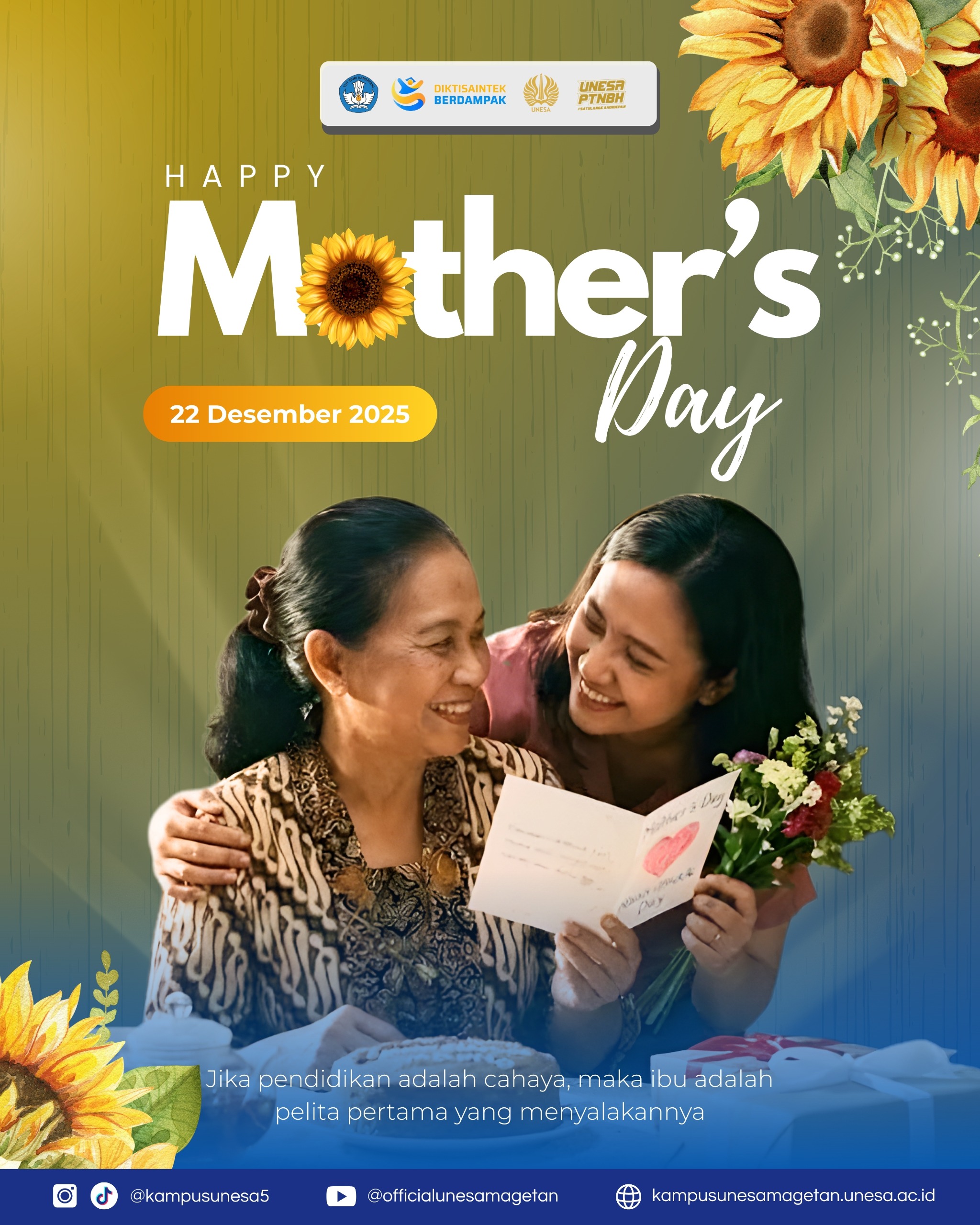
Today, December 22, 2025, marks the 97th National Mother's Day in Indonesia. This is not merely a day for giving flowers or warm wishes to our mothers, but a profound moment of reflection on the struggles of Indonesian women. This year's theme, "Empowered and Creative Women, Towards a Golden Indonesia 2045," reminds us that Mother's Day in Indonesia is not an import from the sentimental Western Mother's Day, but a milestone of women's emancipation born from the First Indonesian Women's Congress held on December 22-25, 1928, in Yogyakarta.

That congress became a symbol of awakening: dozens of women's organizations from Java and Sumatra gathered to demand rights to education, equal marriage, and active roles in the nation's independence. They were not just mothers in the household, but fighters who realized that national progress is inseparable from women's empowerment. This is the essence of our Mother's Day – emancipation that does not separate the domestic sphere from the public one.
Yet, in this modern era, debates often arise: does the role of a mother in the household contradict emancipation? Many view stay-at-home mothers as a "return to traditional nature," while emancipation is equated with career women who are economically independent. In truth, the real strength of Indonesian women lies right here.
The role of a mother in the household is not confinement, but the foundation of emancipation. A mother who cares for children, manages family finances, instills moral values, and creates household harmony is exercising real power. She is the primary manager of the family, the first educator of future generations, and often the strategic decision-maker. In the household, mothers shape children who will later become national leaders – confident daughters and sons who respect equality.
True emancipation is not about forcing all women to work outside the home, but granting the freedom to choose without stigma. A stay-at-home mother who is happy with her choice represents the highest form of emancipation: she is free from societal pressures demanding "must have a career" to be considered progressive. Conversely, a career woman who still maintains her household is also emancipated, as she rejects the outdated dichotomy between domestic and public realms.
Amid today's challenges – such as the double burden on working mothers, domestic violence, or gender gaps in various sectors – Mother's Day calls us to support women in all their roles. The state must strengthen protections for stay-at-home mothers, such as recognizing domestic work in the national economy, lifelong access to education, and policies enabling work-household balance.
Ultimately, Indonesian women's emancipation flourishes from strong households. An empowered mother at home will give birth to an empowered generation in society. Towards a Golden Indonesia 2045, let us celebrate Mother's Day by honoring mothers as agents of change – whether in the kitchen, the office, or the field of struggle.
Happy Mother's Day to all the remarkable women of Indonesia. You are the pillars of our emancipation.
Opinion by someone love her mother.
Share It On:
